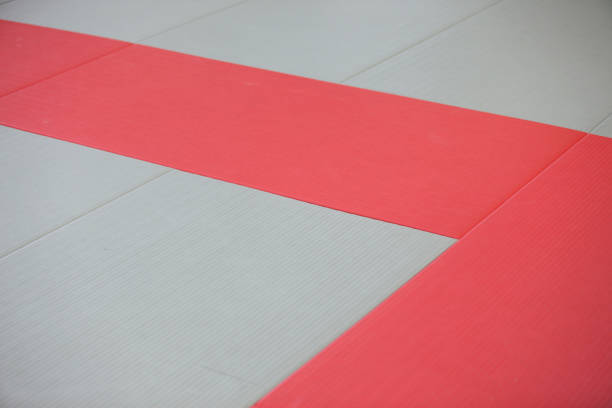
Preparing a training floor for a discipline built around throws requires more than placing a few soft surfaces on the ground. Dojos set up their floors using a sequence of practical decisions that ensure the space behaves predictably during forceful movements. Because throws involve rotation, sudden shifts in body weight, and rapid downward motion, the floor must help absorb those actions without affecting footwork. Coaches and facility owners take this process seriously, as a well-prepared floor supports both correct technique and long-term safety.
The first issue they evaluate is how the sub-floor handles impact. Joints and wooden platforms beneath the main surface must distribute force evenly. If the foundation flexes too much, it interferes with balance during stance work. If it barely moves, it sends too much shock back through the body during falls. A stable, supportive foundation ensures the upper layers perform as expected. This base becomes the structural anchor for the entire training area.
Next comes alignment. Dojos place tiles or sections carefully so each one sits flat without gaps. Even a small misalignment can interrupt the flow of a throw. Practitioners moving into a sweep or pivot depend on consistent footing. A raised corner disrupts rotation and can catch toes or heels at the wrong time. In a room where repeated practice forms muscle memory, inconsistencies in the surface would break the rhythm of movement. Coaches run their hands across each seam to confirm the pieces meet cleanly.
Once alignment is set, surface traction becomes the focus. A throw often begins with gripping the opponent and controlling momentum. Trainees need the ground to offer enough grip to support strong foot drives yet still allow minor adjustments without sticking. When they step forward or shift their weight to initiate a throw, the floor must respond with accuracy. The top layer of judo mats provides a specific level of friction that matches this need. Too much grip stalls movement; too little grip causes slipping during rotation.
Edge finishing plays its own role in floor preparation. The outer border of the training area must transition smoothly into walkways. A sudden drop between the judo mats and the surrounding floor creates a tripping hazard, especially when students step backward after finishing a technique. By tapering the edges or adding a gentle slope, the dojo avoids these abrupt transitions. This also keeps the training area visually distinct, helping students stay within safe boundaries.
Temperature control enters the planning as well. Foam surfaces can behave differently when the room becomes too warm or too cool. Excess heat may soften certain layers, while cold conditions can make them feel firmer. Dojos maintain the room at a stable temperature so the mats behave the same way throughout the session. This stability supports consistent technique refinement.
Accessibility also shapes preparation. Students often carry gear, water, or towels around the room. Walkable paths along the edges must stay clear so people do not track debris onto the training surface. Even small particles affect traction. Coaches inspect the floor before class begins, making sure nothing interferes with the mat texture. A clean path in and out of the training area helps preserve the surface for longer periods.
Sound damping plays a quieter role but remains important. Hard floors create sharp noise when bodies hit the surface. With the correct padding, impact noises become softer and less distracting. This helps coaches communicate instructions across the room without raising their voice.
When the surface behaves predictably, students develop confident technique and reduce unnecessary strain. Through this detailed preparation, judo mats become more than a soft layer—they become an essential part of the training method.