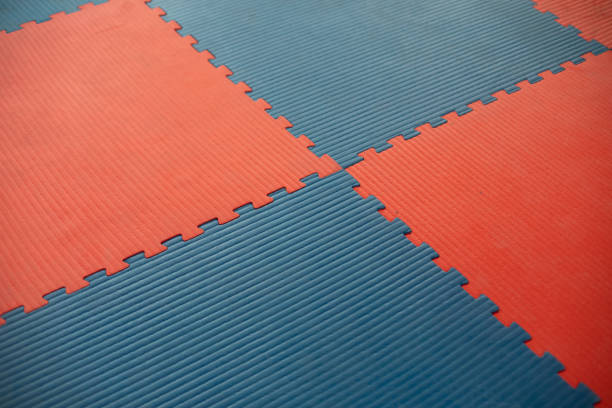
Training spaces tell stories through the ground they offer. Every step, strike, and roll starts from below, and that foundation either supports movement or fights it. Jigsaw mats sit at the quiet centre of that balance. They look ordinary interlocking tiles of foam and texture but their design reshapes how athletes train, recover, and protect their bodies.
Each mat connects like a puzzle piece, locking into its neighbour without glue or bolts. This connection isn’t only for convenience; it distributes energy across the floor. When someone lands or pivots, the shock doesn’t stay under one foot it travels through the pattern, reducing strain. The surface flexes slightly, following motion instead of resisting it. That flexibility turns hard work into safer repetition.
The foam inside jigsaw mats walks a careful line between firmness and give. Closed-cell EVA foam resists moisture and holds shape after thousands of impacts. It cushions without sinking and grips without sticking. This balance matters for martial artists, gymnasts, or fitness enthusiasts who need both stability and softness. A floor too stiff punishes practice; too soft, and balance breaks down.
The top layer adds another layer of subtlety. Textured finishes stop slips during quick turns or takedowns. Patterns differ by sport some mimic tatami for combat training, others stay smooth for yoga or dance. Even colour choice plays a role. Alternating shades help trainers mark boundaries or zones without paint. Every small detail serves a purpose, blending utility with safety.
Because they lock together, these mats offer flexibility that traditional flooring can’t. A studio can reconfigure space in minutes expand for a tournament, shrink for private lessons, or replace damaged sections without replacing the entire floor. It’s modular efficiency that keeps downtime low and training consistent. The pieces move with you, adapting to changing needs.
Maintenance stays simple. A damp cloth removes sweat and chalk; occasional disassembly lets air reach the underside. The foam doesn’t absorb water, so odours rarely linger. When a piece wears out, one replacement fits right in. That ease of care makes jigsaw mats ideal for small gyms, schools, and home training areas where budgets and storage space are tight.
Safety, though, remains their main story. Jigsaw mats absorb impact across surfaces instead of concentrating it. Falls become lessons, not injuries. Parents favour them in play areas for that same reason they protect without needing supervision every second. For combat athletes, they reduce bruising and fatigue during long sessions. They also dampen noise, a detail often overlooked until late-night training begins.
The environmental side of production is improving too. Some modern versions use partially recycled foam or low-emission manufacturing. The goal is to keep durability high while cutting waste. Since the mats last years with care, their footprint already stays low compared to disposable flooring. It’s a small but practical step toward responsible design.
Still, jigsaw mats don’t replace good technique or discipline. They simply create the conditions for progress. A martial artist learns to fall properly; the mat ensures the landing teaches, not punishes. A gymnast perfects balance; the surface gives honest feedback without fear. The partnership between human and mat grows through repetition trust built step by step.
The real proof of good design shows when the user forgets it’s there. Training flows, movements link, focus narrows. The floor feels steady but alive, giving just enough. That’s when jigsaw mats succeed when they disappear into motion, letting athletes push harder without breaking rhythm.
Every athlete deserves a surface that understands movement rather than resists it. These mats don’t fight back; they adapt, absorb, and endure. In doing so, they make the room safer, the training longer, and the progress smoother one interlocking square at a time.